Build an everyday outfit around a comfortable base, a useful layer, and one intentional detail. Repeat what works, then change just one element.
A good everyday outfit should leave you free to think about the day ahead. It needs to feel comfortable on the way out, work for what you actually have planned, and still feel like something you chose. That is a more useful brief than trying to look effortlessly dressed every morning.
The formula here is deliberately small: a base, a layer, and a detail. Think of it as a starting point you can adapt, rather than a uniform you have to follow.
Start with the day, then the clothes
Before opening the wardrobe, name three things: the weather, how much walking you will do, and the most formal place you need to be. A desk day with an evening meal needs different shoes from a day spent carrying groceries. Choosing footwear early saves you from building an outfit that only works while standing still.
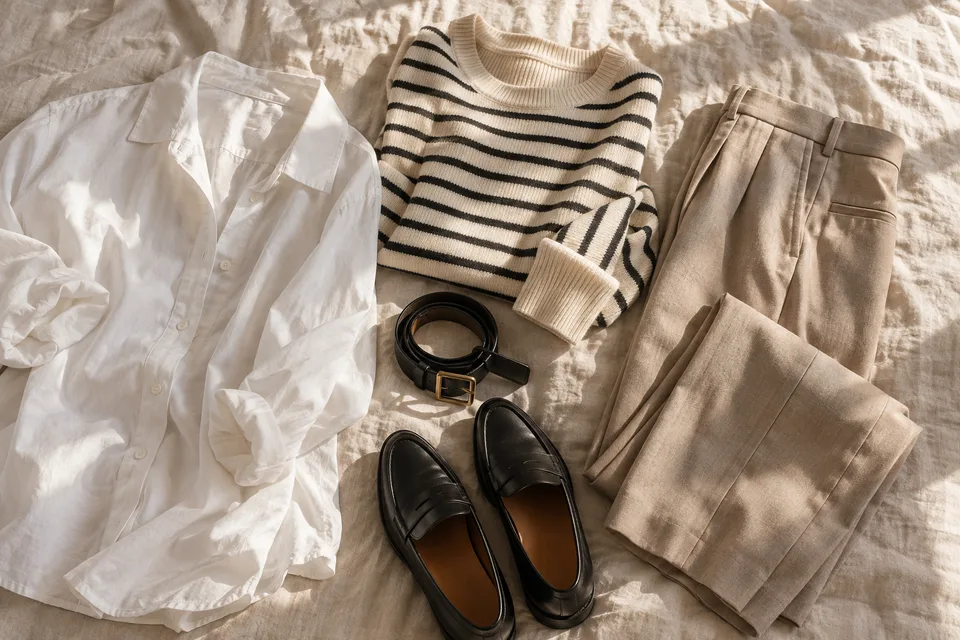
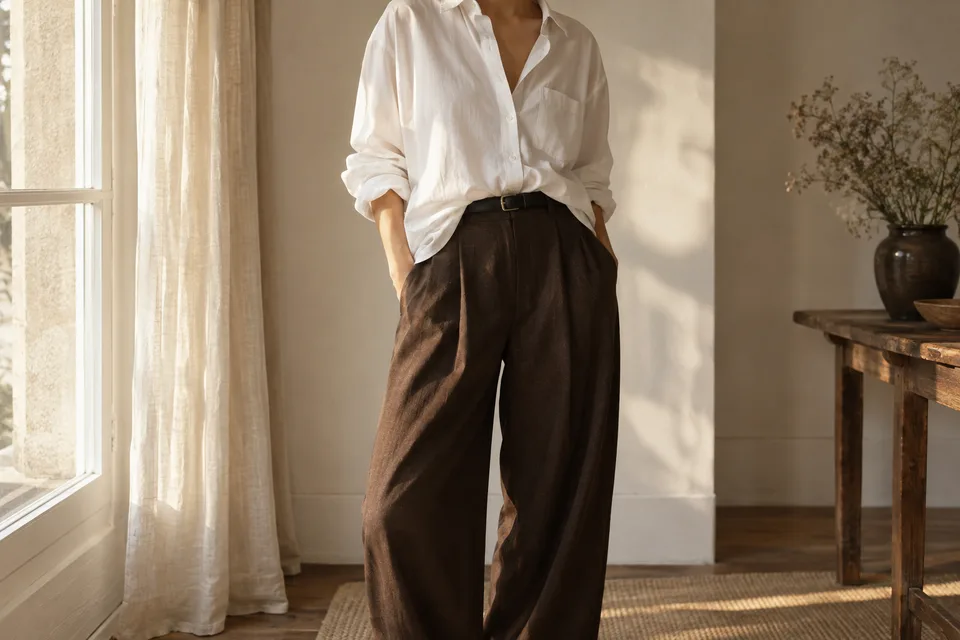
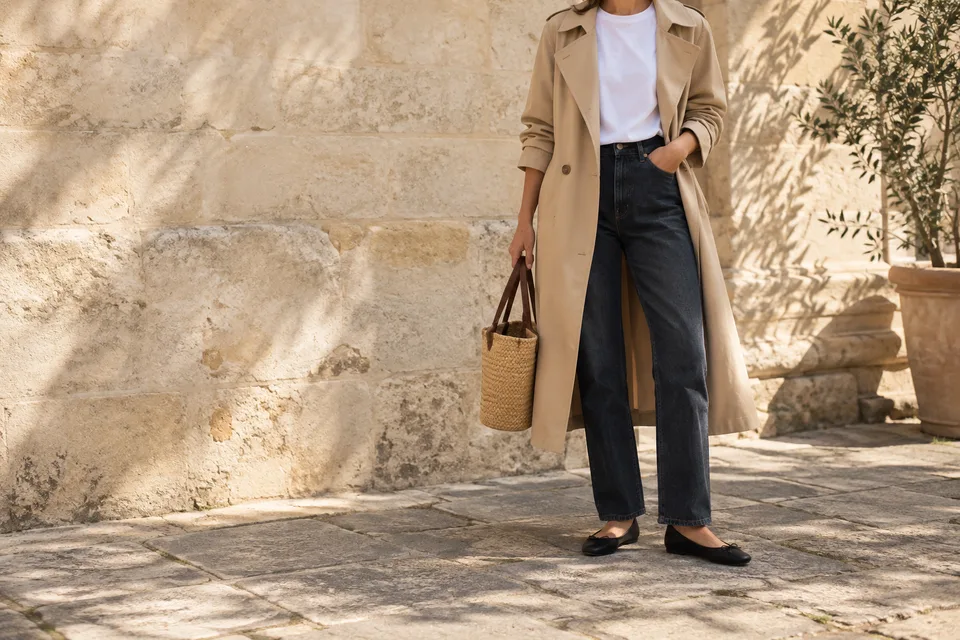
Make the base out of two pieces that sit comfortably together. Straight jeans with a soft T-shirt are one option; loose trousers and a fitted knit are another. Check the outfit sitting down, reaching overhead, and walking around. Comfort is part of the design.
Give the base a little structure
A layer can change the shape of familiar clothes without changing everything underneath. A long coat creates a continuous line. An open shirt adds a softer frame. A cardigan can be worn buttoned as a top or open when the room is warmer.
Look at the hem lengths together. If a long shirt and a long jacket feel busy, try a shorter base layer or a small front tuck. If a fitted top feels too exposed, a relaxed overshirt may give you the balance you want. These are adjustments to try in a mirror, not rules about your body.
Choose one detail that feels deliberate
A belt, a scarf, or a pair of earrings can be enough. The point is to create a place for the eye to rest. Repeating a color can do the same job: dark shoes with a dark bag, or a soft blue shirt with a blue stripe in a scarf.
Try removing one accessory before adding another. An outfit often becomes clearer when its strongest detail has a little space around it. That detail might simply be the rolled cuff of a shirt.
Three combinations to try
| The day | Comfortable base | Useful layer | Finishing touch |
|---|---|---|---|
| Errands and coffee | T-shirt and straight jeans | Open cotton shirt | Canvas tote |
| A relaxed workday | Knit top and tailored trousers | Light blazer | Simple belt |
| A slow weekend | Long skirt and soft tank | Cardigan | Flat shoes in a contrasting color |
Use equivalent pieces you own. A light jacket can take the place of a blazer; a soft trouser can replace denim. Fit, weather, and your plans matter more than matching the table exactly.
Keep a record of the combinations you like
Take a quick private mirror photo when an outfit works, or write the combination in a note. Include the shoes and the weather. After a week, look for repeats: a neckline you reach for, a proportion that feels right, or a layer you use every day.
Those observations are the beginning of personal style. For a smaller wardrobe that supports them, try the 12-piece capsule exercise. Let the clothes earn their place through use, and let repetition become a pleasure.
A few good questions
What is a simple everyday outfit formula?
Start with a top and bottom you feel comfortable in, add a layer for the weather, and finish with one detail such as a belt or scarf.
Do I need new clothes to use this formula?
No. Try it with pieces you already wear. A week of outfit notes can reveal a useful gap before you decide to buy anything.
Published and reviewed October 6, 2026. Editorial disclosure.