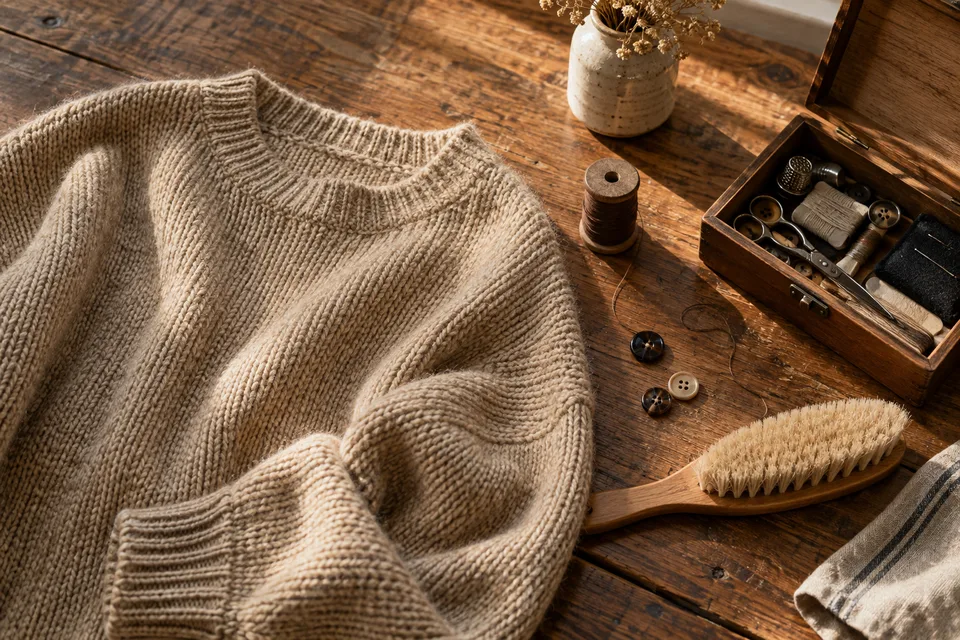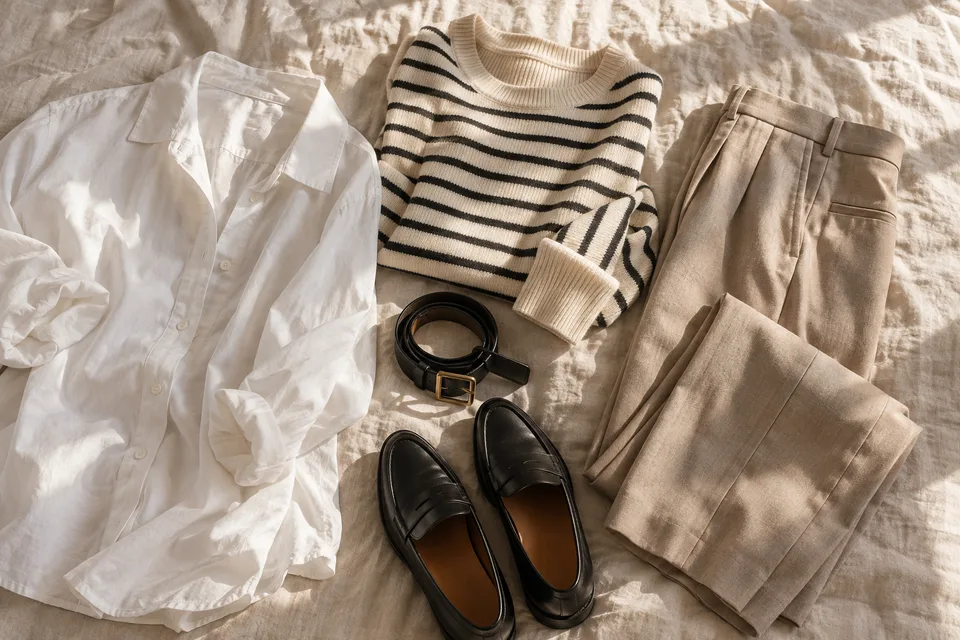
Choose 12 frequently worn pieces for a two-week experiment: four tops, three bottoms, two layers, two pairs of shoes, and one flexible extra.
The most useful capsule wardrobe is a set of clothes that works for your actual week. It is not a fixed aesthetic, and it does not have to be neutral. Think of this 12-piece version as a short experiment: a way to see your favorite combinations more clearly without discarding the rest of your wardrobe.
Set aside two weeks. Keep all your other clothes available. If the selection stops serving you, change it. The information you gather is more valuable than sticking to an arbitrary number.
Begin with your most repeated week
List the activities you dress for, including the unremarkable ones. Work, errands, school runs, dinners, and time at home all count. Next, note the weather and your usual laundry interval. Someone washing once a week may need more tops than someone doing a small load every other day.
Pick one outfit you already wear often. What makes it work? A soft waistband, sleeves that layer easily, or shoes you can walk in are useful clues. Build around those qualities before thinking about a color palette.
Choose the twelve pieces
- Four tops: a comfortable everyday top, a shirt, a knit, and a second option that changes the mood.
- Three bottoms: two you already reach for and one that adds variety.
- Two layers: choose for your climate, such as an overshirt and a jacket.
- Two pairs of shoes: both should serve the activities on your list.
- One flexible extra: a dress, another top, or a weather-specific piece.
Keep underwear, sleepwear, specialist uniforms, and exercise clothes outside this count. Accessories can stay available too. This is an outfit-planning tool, not a competition in owning less.
Try combinations before the week starts
Lay the pieces out, then make complete outfits including shoes. Do not assume that two items will work together because they are both described as basics. Necklines, lengths, and fabric weight affect how a combination feels.
Look for at least five outfits you would willingly wear tomorrow. If one piece fits only a single narrow occasion, replace it with something more useful for this experiment. You are not deciding whether to keep the item forever.
Record the friction
At the end of each day, write a short note. Too warm? Missing a pocket? Shoes uncomfortable after lunch? The best observations are specific. “I need another breathable work top” tells you more than “I need a better wardrobe.”
Keep track of laundry as well. If the same shirt is always unavailable when you need it, the capsule may need a second top with a similar role. A small wardrobe that creates constant chores is not especially simple.
Use the result before buying
After two weeks, return anything you missed and set aside anything you never chose. A useful gap is one that appeared repeatedly. Try meeting it with a different combination or a repair before purchasing.
If you decide to buy, carry a precise brief: the role, the fit, and the clothes it needs to work with. For more ways to combine the pieces, return to the everyday outfit formula. The capsule succeeds when getting dressed becomes easier, even if the final number is seventeen.
A few good questions
Does a capsule wardrobe have to contain only 12 pieces?
No. Twelve is a starting exercise. Add what your climate, work, activities, and laundry routine require.
Are underwear and sportswear included?
Not in this exercise. Keep underwear, sleepwear, specialist workwear, and sportswear outside the 12 pieces.
Published and reviewed October 6, 2026. Editorial disclosure.