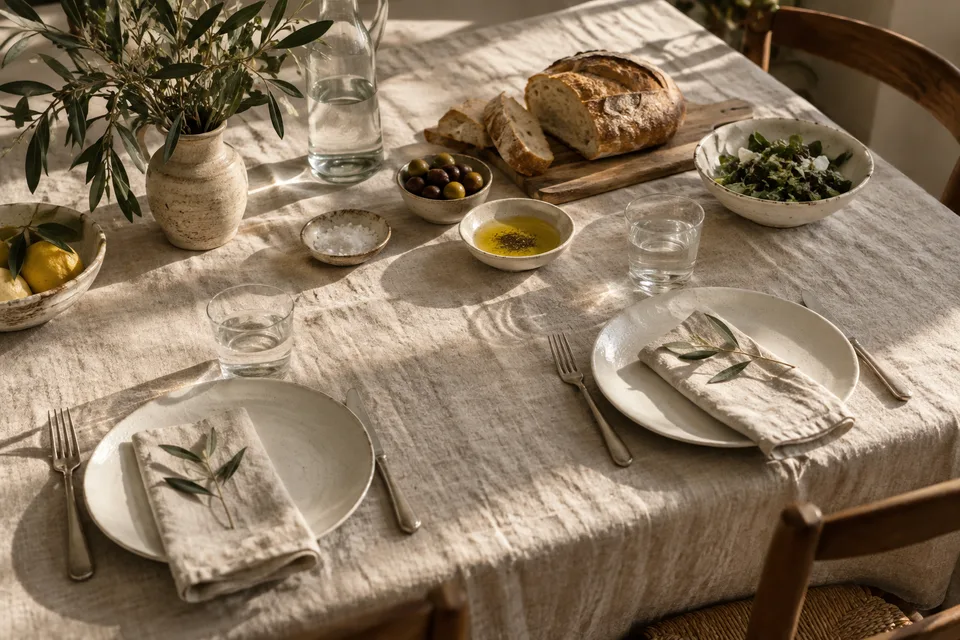
Set out only what the meal needs, add one low detail, and leave room for serving dishes. An everyday table should make eating together easier.
There is a quiet pleasure in using the plate you like on an ordinary evening. It does not need a dinner party, a complete set, or a reason beyond the fact that you are having a meal. An everyday table can be welcoming without becoming another thing to maintain.
Start with the food and the people. Everything on the table should make it easier to eat, talk, or enjoy the setting. If a decoration gets in the way of passing a bowl, it has not earned its place for this meal.
Set the useful things first
Put out plates, cutlery, and the glasses the meal actually needs. Leave enough space between settings that people can move comfortably. If the table is small, keep extra utensils nearby rather than placing everything out at once.
Choose serving dishes before adding decoration. A salad bowl, bread plate, or water jug may already provide all the shape and texture the center needs. Food is part of the table, not something squeezed around the arrangement later.
Add one soft layer
A tablecloth, a runner, or cloth napkins can soften the surface. Use what is practical for your household and laundry routine. Bare wood with a simple placemat can be just as inviting.
Check care instructions and protect surfaces as the furniture maker recommends. A beautiful finish is easier to enjoy when hot dishes and spills have been considered. Everyday use and sensible care can belong together.
Mix with a small thread of connection
Different plates can feel intentional when one element repeats. Try the same napkin color, a common glass shape, or a limited range of materials. The repeat gives the eye something familiar without requiring a matching set.
Keep the contrast comfortable. A patterned plate might be enough on its own; a quieter surrounding setting lets it stand out. If you enjoy more color, let the meal suggest a starting point instead of buying decorations for a single occasion.
Keep the center low and simple
A small vase, a bowl of fruit, or a single branch can be enough. Avoid anything that blocks faces or prevents you from setting down food. Check that any plants or decorative materials are appropriate around children, pets, and food.
If using candles, follow the candle maker’s safety guidance, keep them away from flammable materials, and never leave them unattended. A table does not need candles to feel special; a small lamp nearby can create a pleasant atmosphere too.
Make clearing up part of the plan
The everyday version should be easy to repeat. Choose dishes you can care for comfortably and keep a place ready for used linens. If a setup creates a large amount of work after a simple meal, remove a layer next time.
For guests, the most welcoming detail may be leaving enough attention for conversation. Use the low-pressure hosting plan to keep preparations manageable. A table has done its job when people feel comfortable sitting down and staying a little longer.
A few good questions
Do dishes need to match?
No. Repeating one element, such as a color or glass shape, can connect a mixed table while keeping it personal.
How do I make a small dining table feel welcoming?
Keep the center clear enough for food, use low decorations that do not block conversation, and avoid adding items that guests must move.
Published and reviewed October 6, 2026. Editorial disclosure.