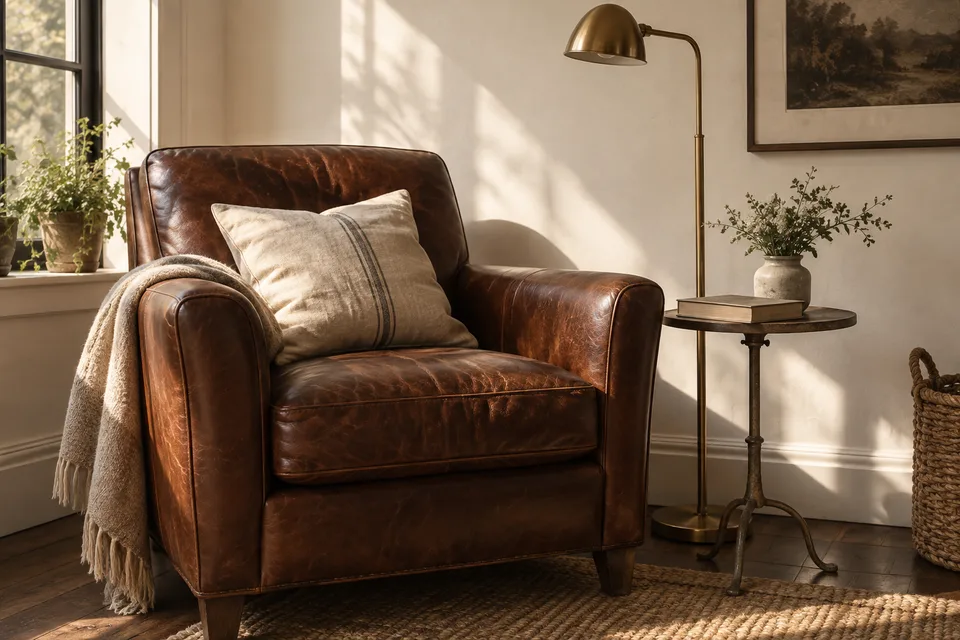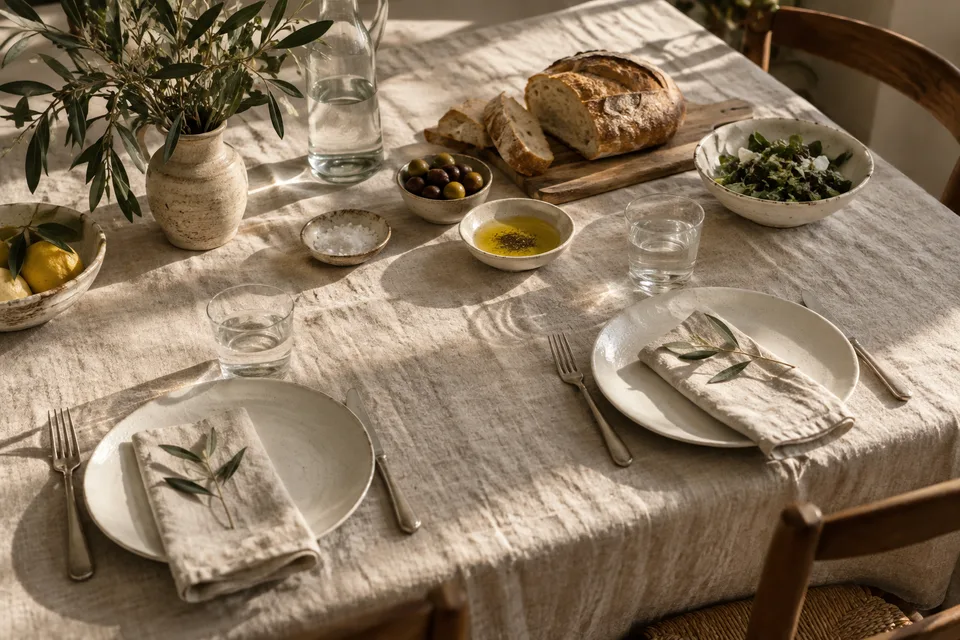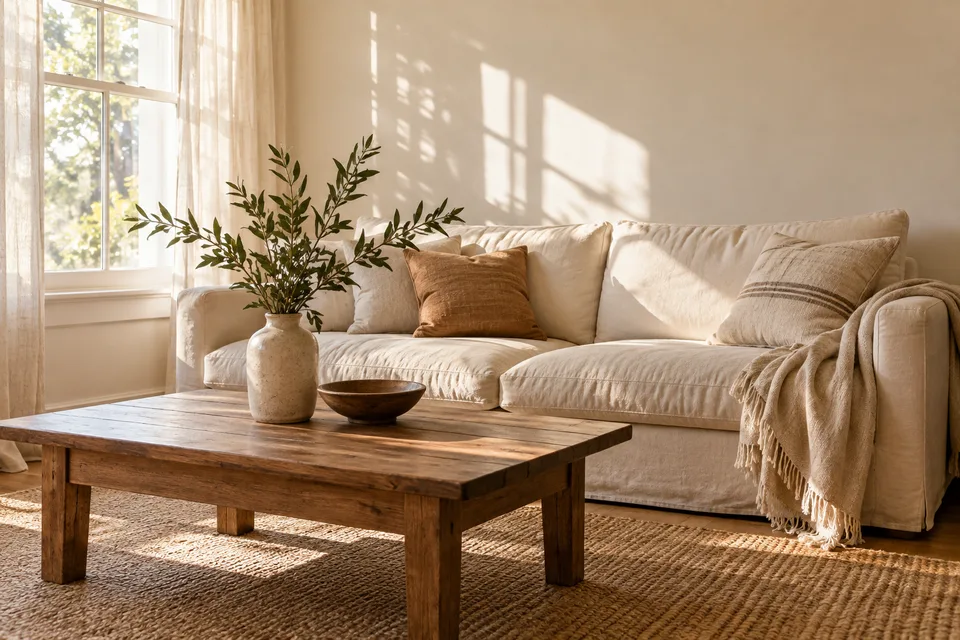
Choose one useful focal point, repeat a few materials, and leave empty space. A collected room grows through daily use instead of arriving all at once.
A room can be beautifully arranged and still feel as though nobody lives there. The opposite is also possible: a mix of ordinary furniture, a well-used blanket, and a few familiar objects can feel immediately welcoming. The difference often comes from attention rather than expense.
A collected home makes room for your life. It does not require every object to be old, handmade, or meaningful. It simply allows useful things and personal things to exist together without filling every surface.
Notice the room before changing it
Spend one normal evening in the space. Where do you put your drink? Which chair do you choose? What do you move out of the way? Those little frictions are better starting points than a photograph of somebody else’s room.
Write down one thing that works and one thing that does not. Perhaps the sofa catches the afternoon light, but the side table is too far away. Moving a table might improve the room more than buying another decorative object.
Let one corner lead
Choose a small focal point: a reading chair beside a window, a low cabinet, or the wall above a sofa. Give it a useful anchor first. A chair needs a reachable surface and suitable light; a cabinet needs enough clear space to open comfortably.
Add only a few objects. A lamp, a shallow bowl, and one framed picture are a complete arrangement. If you have several small keepsakes, group them on one tray or shelf so they read as a collection instead of scattered clutter.
Repeat materials rather than matching sets
A room can feel connected when a material appears in more than one place. Warm wood might show up in a table and a picture frame. Black could appear in a lamp and a chair leg. Linen might connect a cushion to a curtain.
The repeats do not need to be exact. Different wood tones can work together if their shapes and scale feel balanced. Try placing the pieces together before deciding they are incompatible. Daylight and evening light may change how you see their colors.
Give objects room to be noticed
Clear one surface completely, then return only what you use or want to see. Leave a portion empty. This is not a universal percentage or a styling law; it is a way to notice when a surface stops being useful.
Keep pathways comfortable and doors unobstructed. Place fragile objects away from busy edges, and follow furniture manufacturers’ instructions for anchoring tall items. The room should support the people and pets who live there.
Add slowly, with a reason
Before buying, name the role of the new piece. Is it replacing something uncomfortable, holding something that has no home, or bringing a color you truly want to live with? If the role is only to fill a gap in a photograph, let that gap stay for a while.
A personal room can be unfinished. Books can move. Art can lean on a shelf until you are sure of its place. Start with the small living room reset if you want a manageable first step, and let the room tell you what it needs next.
A few good questions
How can I make my home feel more personal?
Display a few things with a connection to your life, and place them where you can actually enjoy them. Useful furniture and comfortable lighting are a good foundation.
Can I mix old and new furniture?
Yes. Repeating a color, material, or shape can connect different pieces without making them match.
Published and reviewed October 6, 2026. Editorial disclosure.